I love Philip Guston.
I love the pink, the funny, the tragic. The clocks, the heads, the shoes, the cigarettes, the poetic, the cars. I love how he could make something look ridiculous and mythological at the same time.
And until today, I had no idea he was Jewish.
Before Oct. 7, I thought systematic Jew-hatred was a thing of the past. Now, I find myself counting—which of my favorite artists are Jewish?
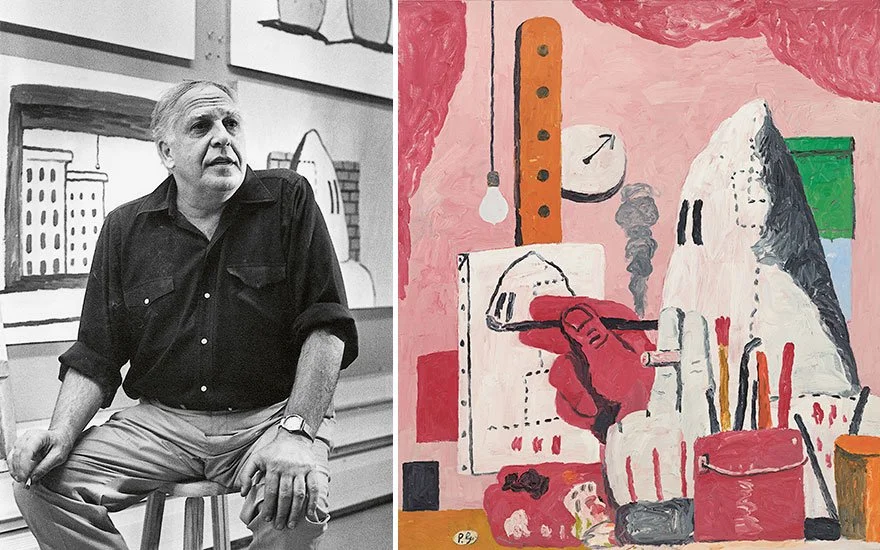
Not because I think Guston’s identity should explain his work, but because suddenly, I am looking at a painter I already love and know through a completely new lens.
Ten years ago, I spent a week in Venice going to his show over and over again, every day. It was the single best show I had seen in my adult life. Nothing has touched me so deeply since. His Jewishness wasn't on my mind then; I was just admiring his black sea and his use of pink.
Guston was born Phillip Goldstein, the son of Jewish immigrants who had fled Odessa. He later changed his surname to Guston. And in an age when Jewish artists are being boycotted again, his story bears a whole new meaning.
Guston’s hooded figures are about the Ku Klux Klan, racism, and American violence. But they are also absurd. They sit in cars, smoke cigarettes, gather in groups. They look like minions from a dark comic strip.
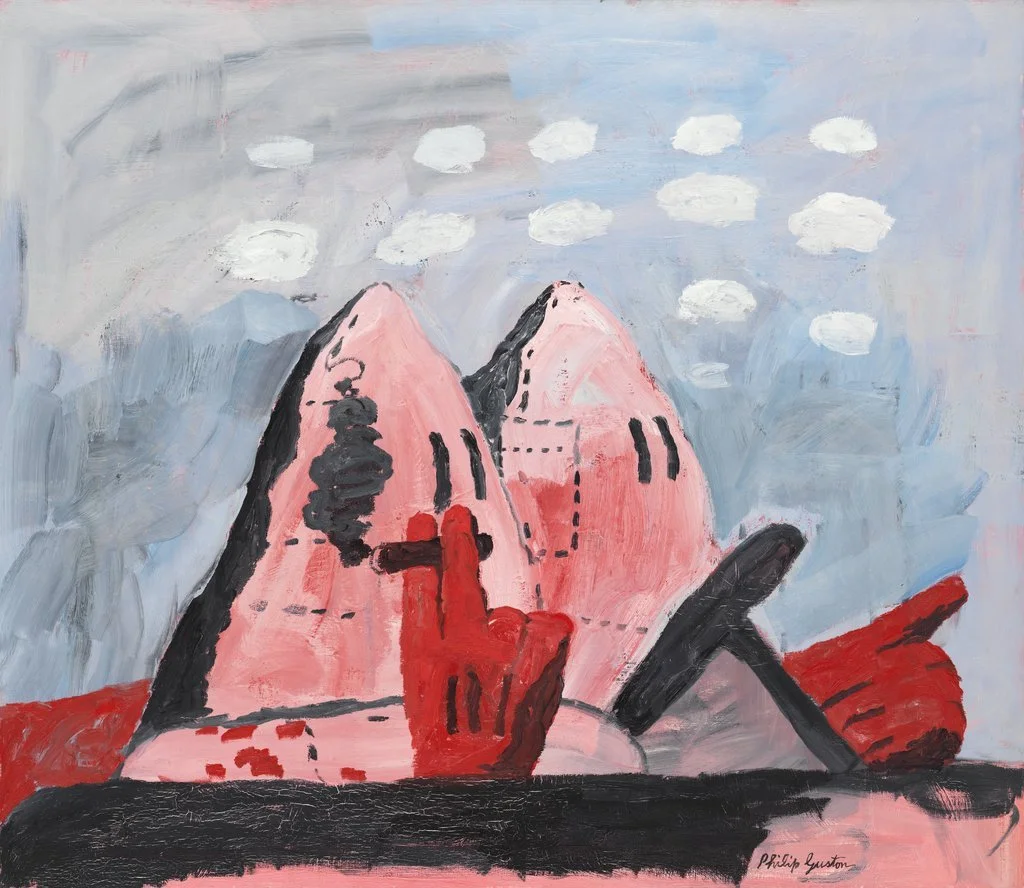
The Klan in his work is exactly like today’s BDS movement.
Guston experienced the same bigotry back then—they boycotted Jews from universities, from city halls, from public life. Looking at people I know now who subscribe to BDS, the paintings suddenly felt different. This is not symbolism; this is advocacy. He probably knew people back then who thought the KKK was virtuous.
Here was a Jewish American artist painting the very image of white supremacist hatred. The hood becomes more than a symbol of someone else’s evil. It becomes a way of asking the spectator: *Do you agree with what they are doing? Are you like them? Will you hurt me? Will you save me?* These are questions every Jewish person asks themselves today.
It makes the paintings feel so much more intimate.
He was painting them to confront the demons. To mock them. To be less scared of them.
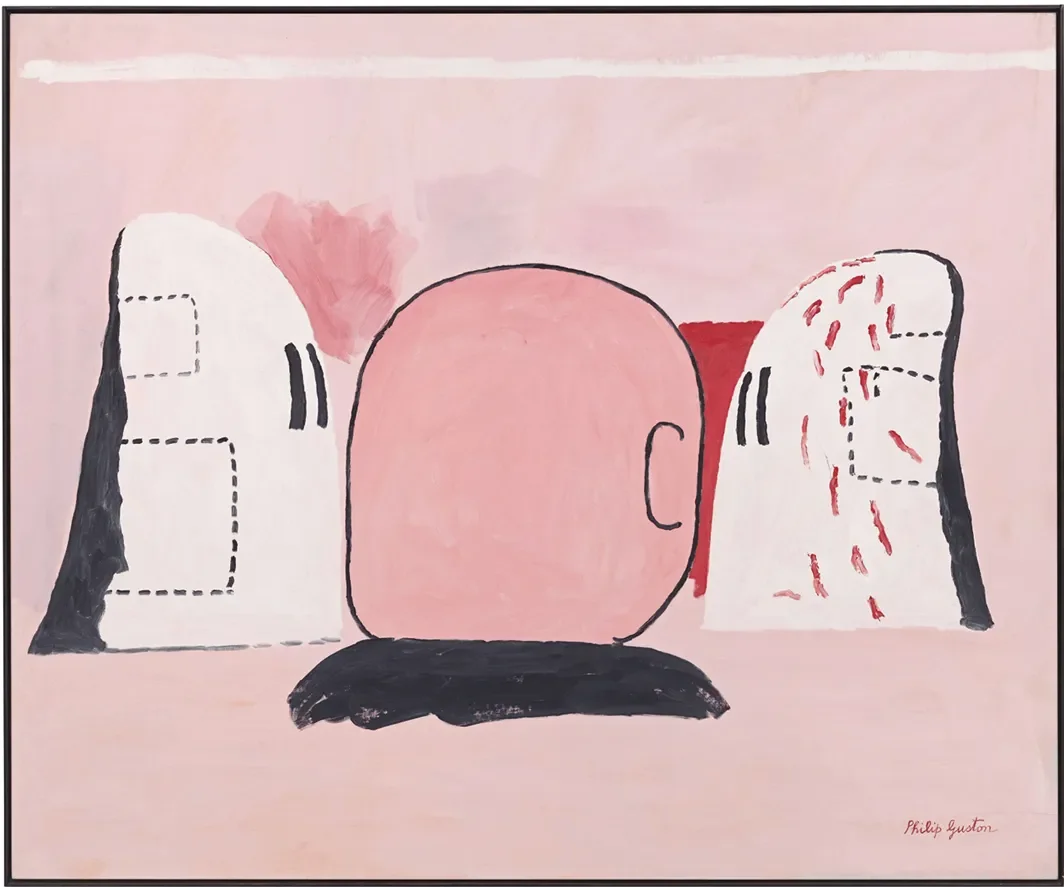
The absurdity is a way to deal with the horror
The Klansmen are not grand, terrifying monsters. They are ridiculous. They look like ordinary men going about their business.
That, to me, is part of what makes the paintings so powerful.
Guston strips away the theatricality of evil. He makes it banal and pathetic. The figures are capable of terrible things, but they are also just sitting around, smoking, driving, existing. Just like the BDS movement today. People I’ve known for years have seamlessly morphed into a modern-day Klan, normalizing hate in our public spaces.
The paintings seem to ask: *What does evil look like when it becomes ordinary?* That is exactly the chilling feeling I have looking at the people around me right now, going to BDS events, thinking they've found something new.
I don't want to reduce Guston to his Jewishness. I don't want to look at every painting and search for a hidden biographical explanation.
But I do want to let this discovery deepen my looking.
I feel less alone in this situation. Knowing he navigated the exact same darkness is amazing. We Jews stand on the shoulders of giants, and he is definitely one of them.
And honestly, I feel honored to be part of his tribe.