The South of France is home to some of Europe’s most important art museums, contemporary art foundations, artist-linked towns, and cultural landmarks. From Montpellier and Sète to Marseille, Porquerolles, Nice, and Menton, the region offers an extraordinary concentration of art and artistic heritage.
Major Art Spots from Spain to Italy
Montpellier — Musée Fabre, MO.CO., La Panacée
Sète — Musée Paul Valéry
Arles — Fondation Vincent van Gogh, LUMA, Les Rencontres d’Arles
Aix-en-Provence — Musée Granet, Atelier de Cézanne, Montagne Sainte-Victoire
Marseille — Palais Longchamp, Musée des Beaux-Arts, Parc Borély, Château Borély
Porquerolles — Fondation Carmignac
Saint-Paul-de-Vence — Fondation Maeght
Nice — Musée Matisse, Musée Marc Chagall, MAMAC
Antibes — Musée Picasso
Vallauris — Musée national Picasso La Guerre et la Paix, ceramics
Biot — Musée national Fernand Léger
Le Cannet — Musée Bonnard
Menton — Jean Cocteau Museum
Montpellier
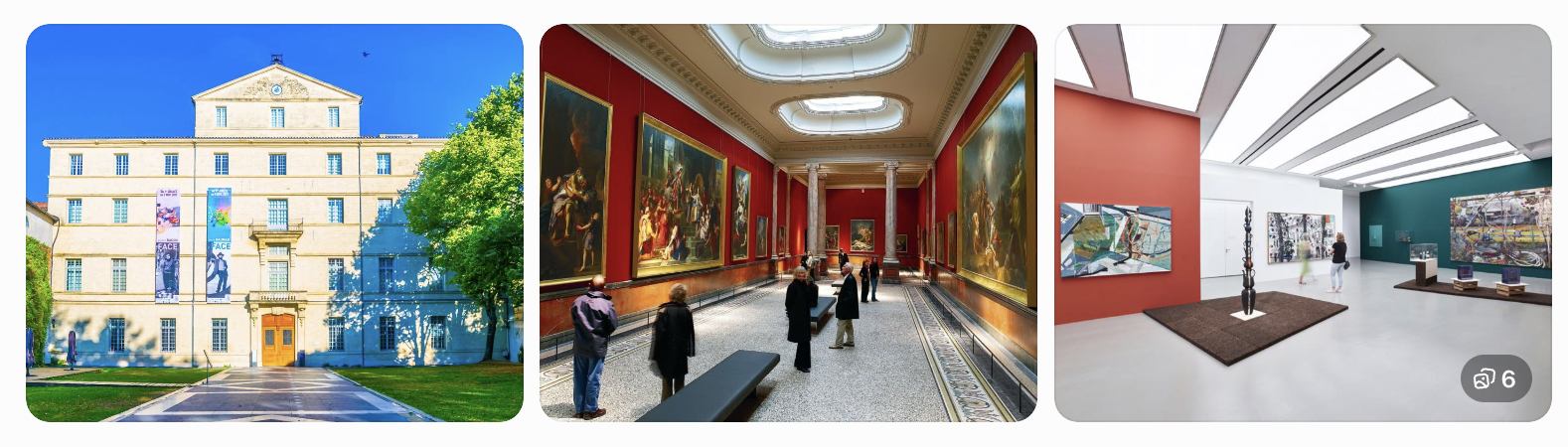
Musée Fabre
The Musée Fabre is one of the major fine arts museums in southern France. Its collections include European paintings and sculptures spanning several centuries, with important works from the Renaissance to modern art.
The museum is also known for its collection of works by Pierre Soulages, one of France’s most influential modern painters.
MO.CO.
The MO.CO. is a major contemporary art center presenting exhibitions by established and emerging artists.
La Panacée
The La Panacée is dedicated to contemporary art and creative practices, with exhibitions and multidisciplinary projects.
Sète
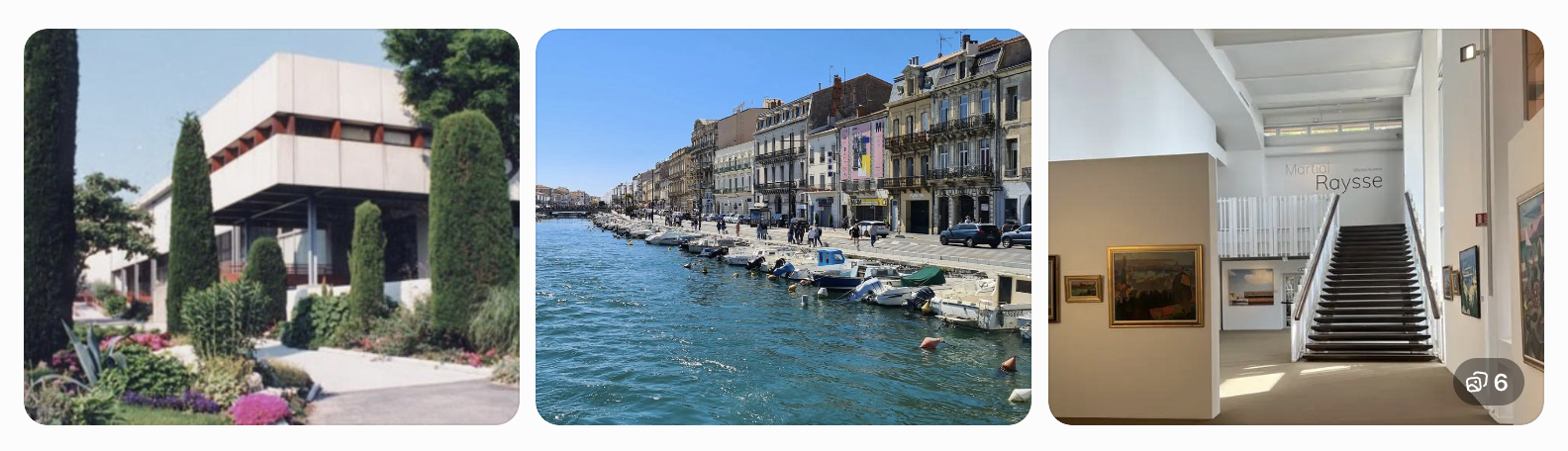
Musée Paul Valéry
The Musée Paul Valéry overlooks the Mediterranean and houses collections of fine art, sculpture, and regional heritage.
Named after the poet Paul Valéry, who was born in Sète, the museum reflects the city’s long connection to literature, painting, and Mediterranean culture.
Sète: An Artistic City
Sète is also associated with artists and writers such as Georges Brassens, and has a strong contemporary creative identity.
Arles
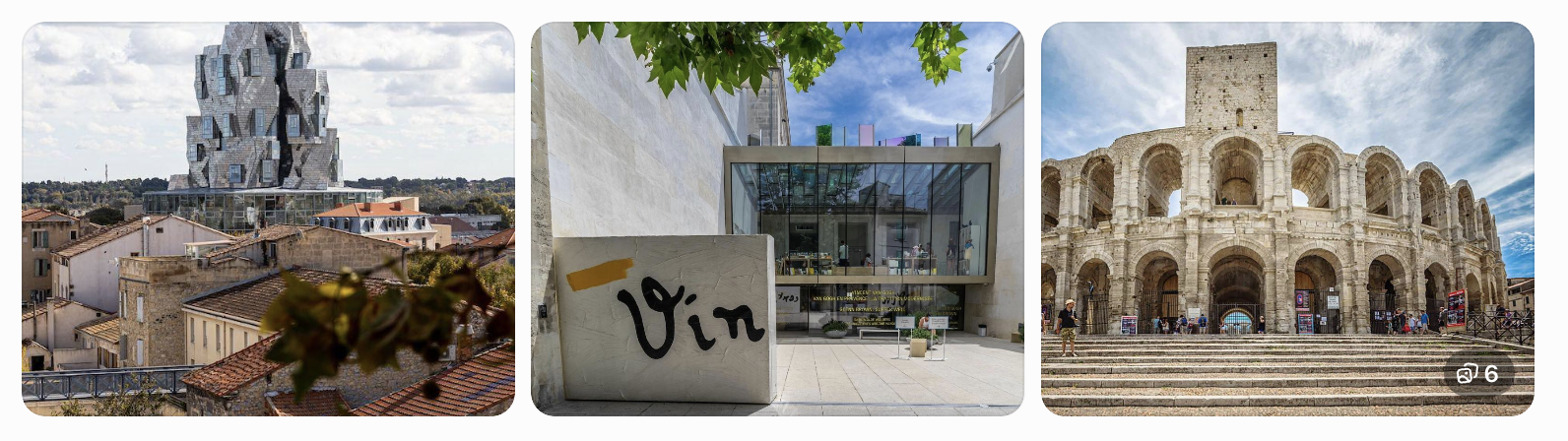
Fondation Vincent van Gogh Arles
The Fondation Vincent van Gogh Arles explores the legacy of Vincent van Gogh and presents exhibitions connecting his work with modern and contemporary artists.
LUMA Arles
The LUMA Arles is a major contemporary arts center known for its exhibitions, architecture, and multidisciplinary programming.
Les Rencontres d’Arles
Les Rencontres d'Arles is one of the world’s leading photography festivals, making Arles an important destination for photography and visual culture.
Aix-en-Provence
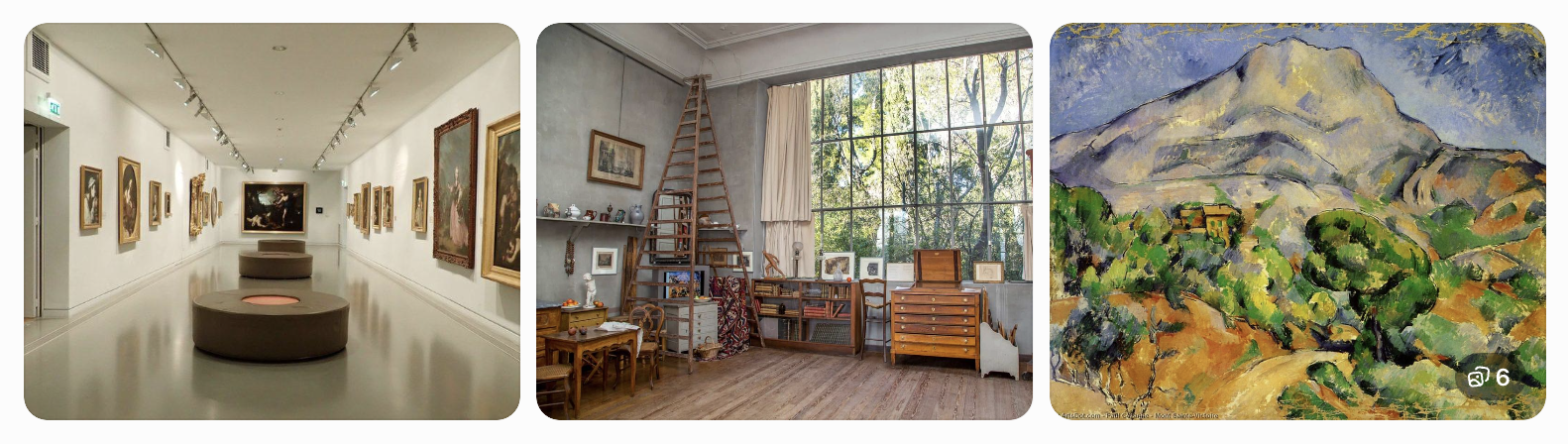
Musée Granet
The Musée Granet houses important collections of paintings, drawings, and sculptures, including works connected to Cézanne and other major artists.
Atelier de Cézanne
The Atelier de Cézanne preserves the studio where Paul Cézanne worked during the final years of his life.
Montagne Sainte-Victoire
The Montagne Sainte-Victoire is one of the most recognizable landscapes in art history, appearing repeatedly in Cézanne’s paintings.
Marseille
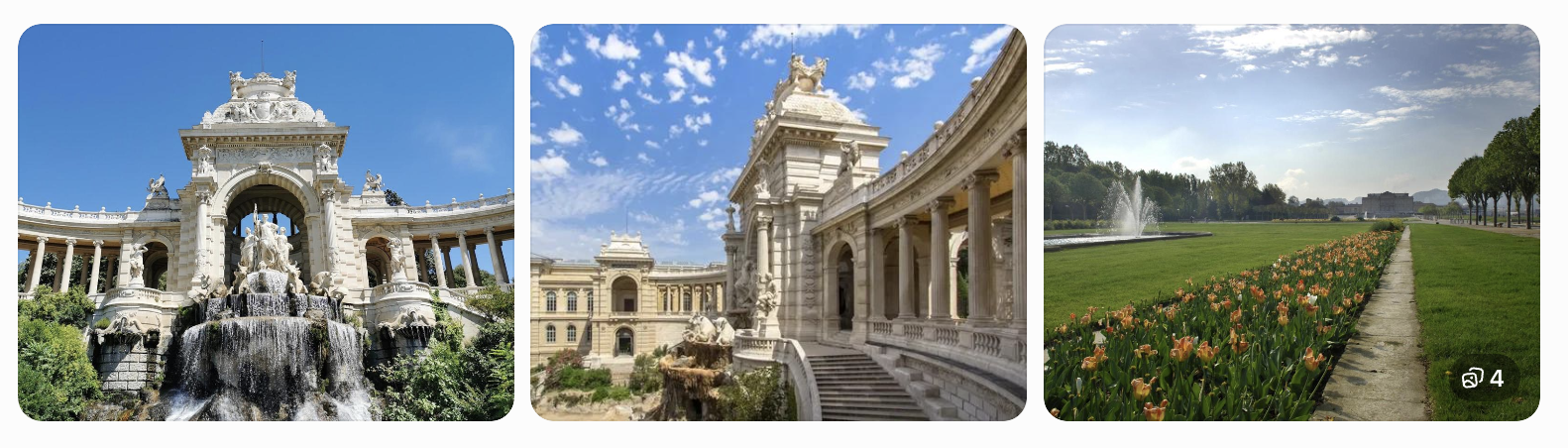
Palais Longchamp
The Palais Longchamp is one of Marseille’s great architectural landmarks. Built to celebrate the arrival of water from the Durance through the Canal de Marseille, it combines monumental architecture, sculpture, fountains, and landscaped gardens.
The palace houses two nice museums:
Musée des Beaux-Arts de Marseille — one of France’s oldest municipal fine arts museums, with paintings, sculptures, and drawings from the 16th to the 19th centuries.
Muséum d'Histoire Naturelle de Marseille — a natural history museum housed in the palace’s opposite wing.
Parc Borély
Parc Borély is one of Marseille’s most important historic parks, combining formal gardens, landscaped grounds, and cultural heritage.
At its heart is the Château Borély, an elegant 18th-century Provençal country residence that houses the Musée des Arts décoratifs, de la Faïence et de la Mode.
The museum’s collections include ceramics, furniture, glass, textiles, decorative objects, design, and fashion.
I used to recommend the Mucem, but I no longer do. I have serious concerns about the political messaging and exhibitions associate with the institution. If you must go, enjoy the views and architecture—but I would personally avoid the interior.
Porquerolles
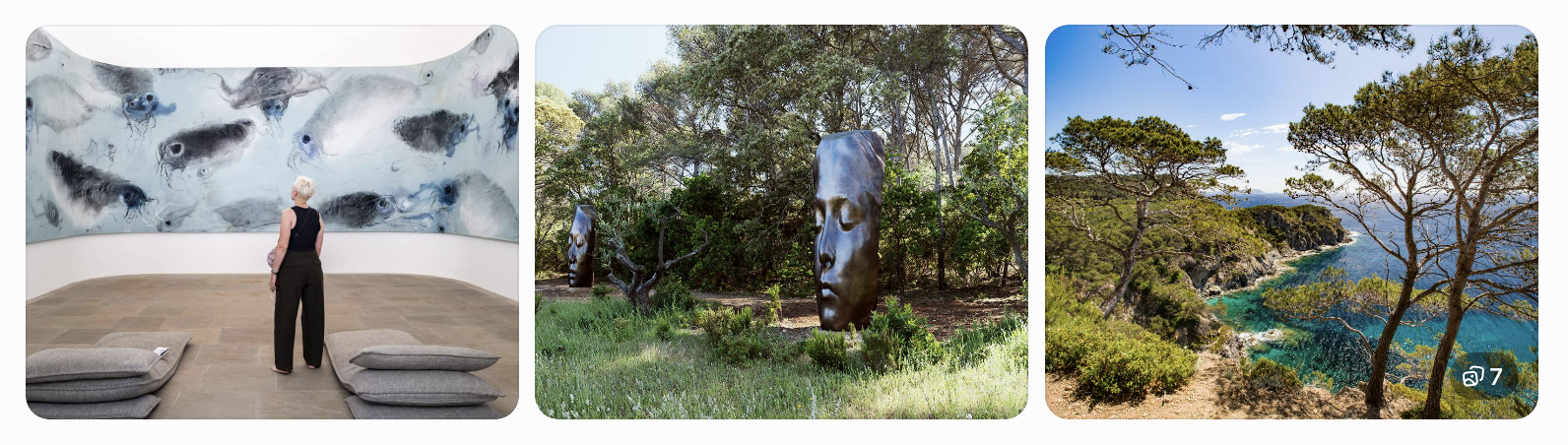
Fondation Carmignac
The Fondation Carmignac is one of the most distinctive contemporary art destinations in the South of France.
Located on Île de Porquerolles, the foundation combines a contemporary art exhibition space with a remarkable sculpture garden.
The Villa houses approximately 2,000 square meters of exhibition galleries, while the surrounding 15-hectare gardens are home to sculptures integrated into the landscape.
The foundation brings together contemporary art, architecture, nature, and the Mediterranean environment in a unique setting.
Saint-Paul-de-Vence
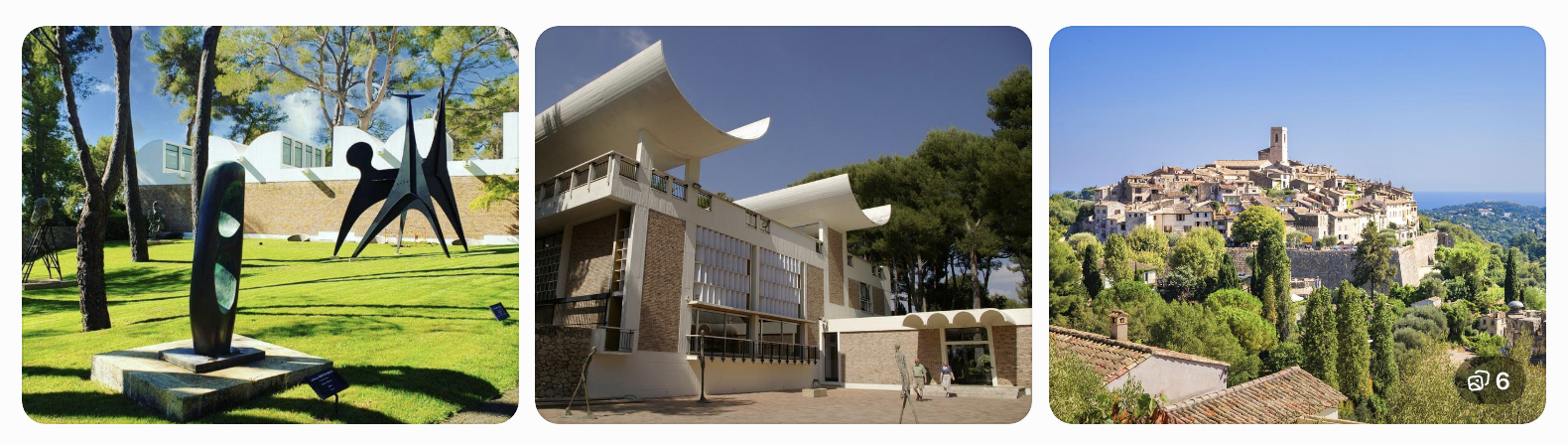
Fondation Maeght
The Fondation Maeght is one of the most important modern and contemporary art foundations in France.
Its collection includes works by artists such as Giacometti, Calder, Braque, and Miró. The architecture, gardens, and sculptures are an integral part of the experience.
Saint-Paul-de-Vence
Saint-Paul-de-Vence is one of the most famous art villages in the South of France, with a long history of attracting artists, writers, and galleries.
Nice
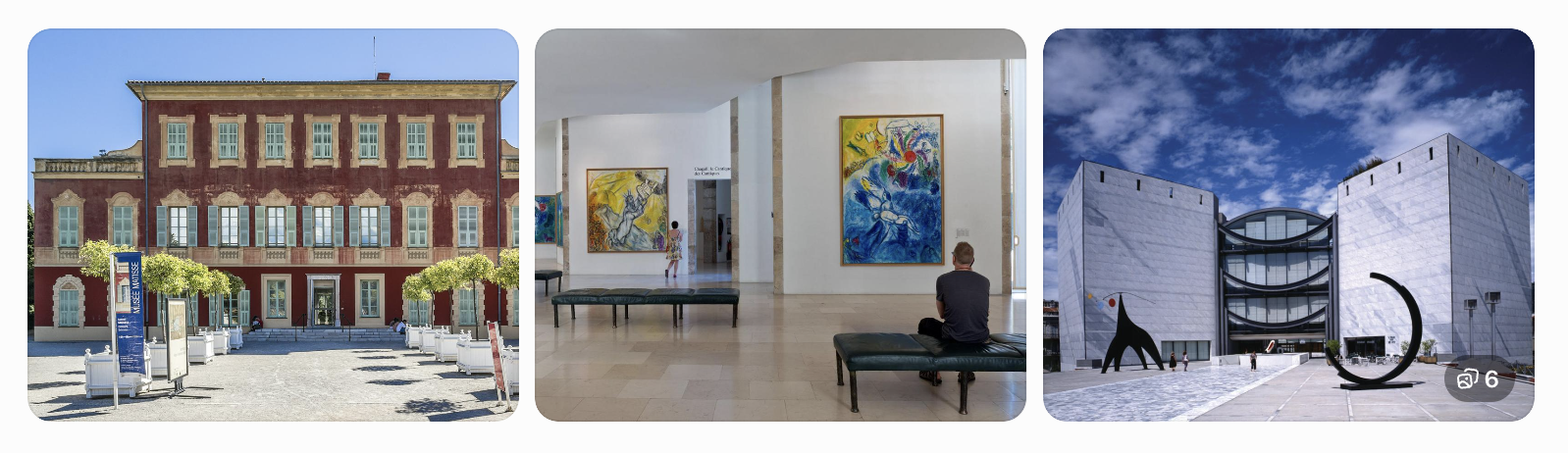
Musée Matisse
The Musée Matisse in the Cimiez district explores the life and work of Henri Matisse through paintings, drawings, prints, and personal objects.
Musée national Marc Chagall
The Musée national Marc Chagall houses a major collection of Chagall’s work, including paintings, drawings, and the celebrated biblical message series.
MAMAC
The MAMAC is a major museum of modern and contemporary art, with works connected to movements such as Nouveau Réalisme and American Pop Art.
Antibes
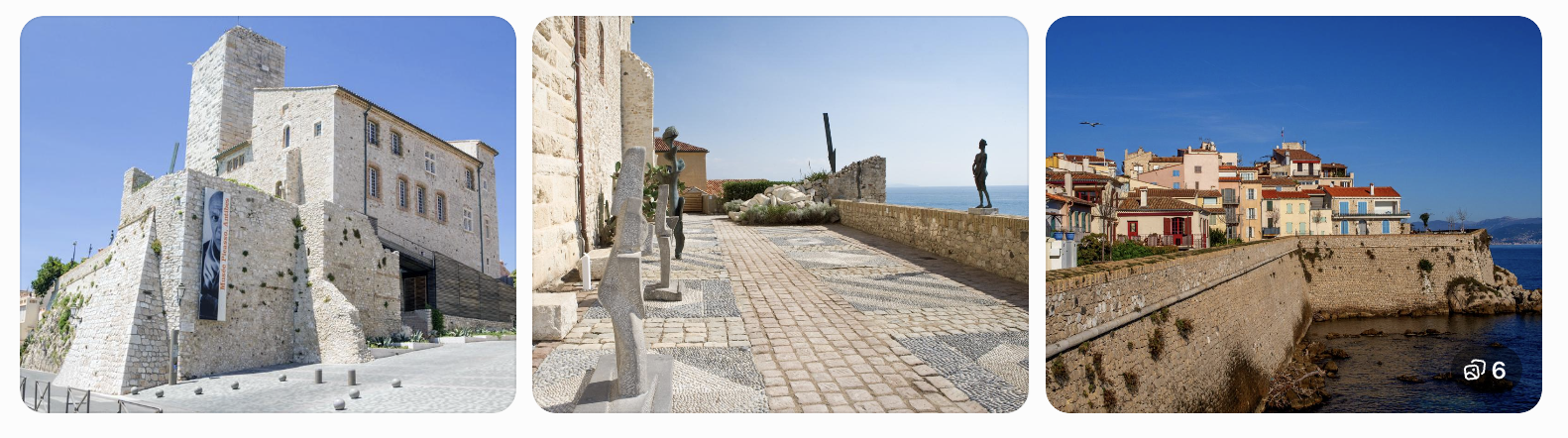
Musée Picasso
The Musée Picasso is housed in the historic Château Grimaldi, overlooking the Mediterranean.
Picasso used the château as a studio in 1946, and the museum now presents works connected to his time in Antibes alongside pieces by other artists.
The museum is one of the most important Picasso sites in the South of France.
Vallauris
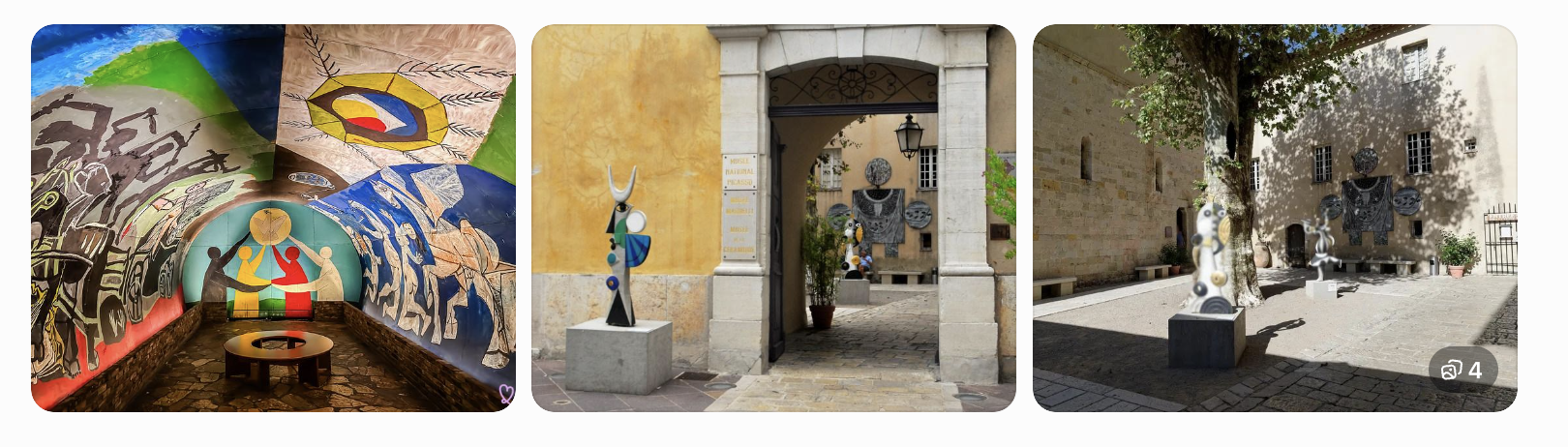
Musée national Picasso La Guerre et la Paix
The Musée national Picasso La Guerre et la Paix is housed in the former Romanesque chapel of the Château de Vallauris.
It is home to Picasso’s monumental War and Peace work, one of his most important political and symbolic creations.
Vallauris and Ceramics
Vallauris is closely associated with ceramics. Picasso’s experiments with pottery helped establish the town as an important center for ceramic art.
Biot
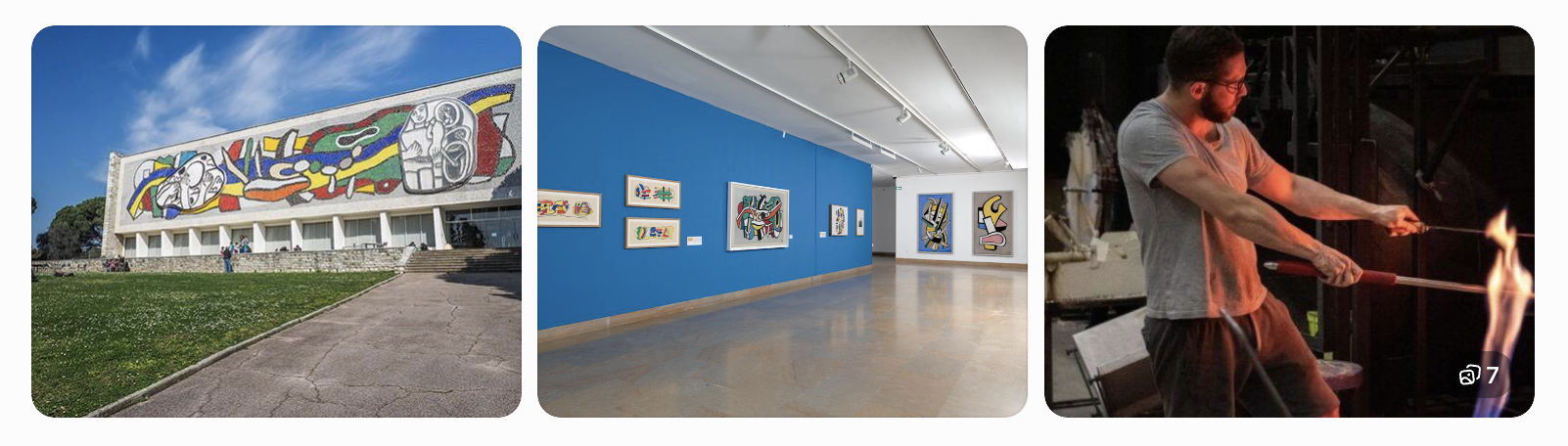
Musée national Fernand Léger
The Musée national Fernand Léger is dedicated to Fernand Léger, known for his bold forms, strong colors, and distinctive interpretation of modern life.
The museum’s architecture and surrounding Mediterranean vegetation are part of the experience.
Biot and Glassmaking
Biot is also famous for its glassmaking tradition, making it an important destination for decorative arts and craftsmanship.
Le Cannet
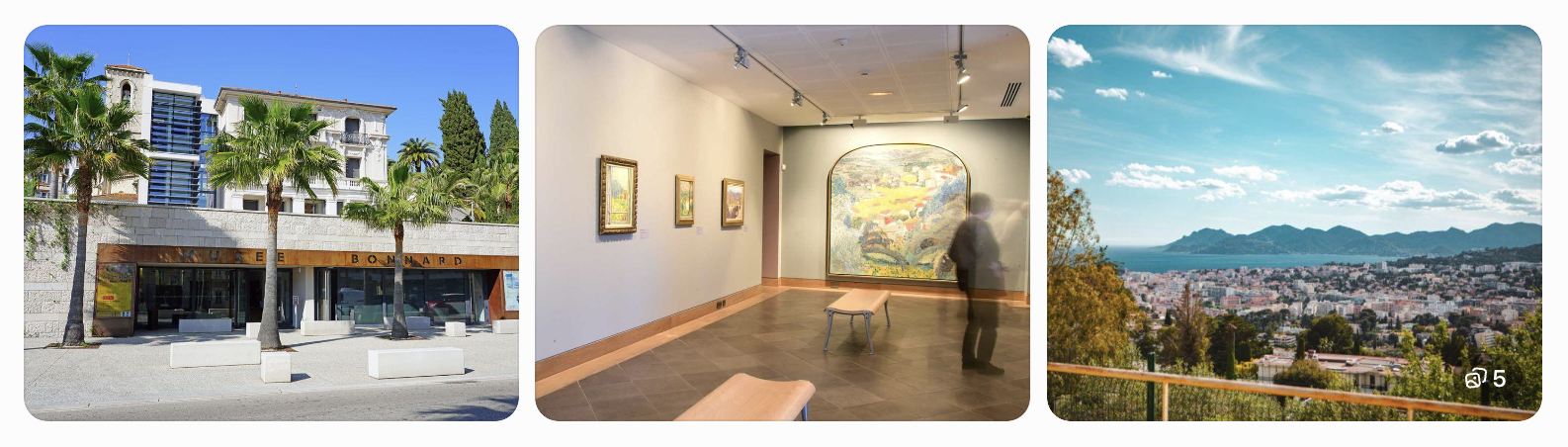
Musée Bonnard
The Musée Bonnard is dedicated to Pierre Bonnard and his connection to Le Cannet.
Bonnard spent significant periods in the town, and the museum offers insight into the colorful, intimate, and luminous qualities of his paintings.
Menton
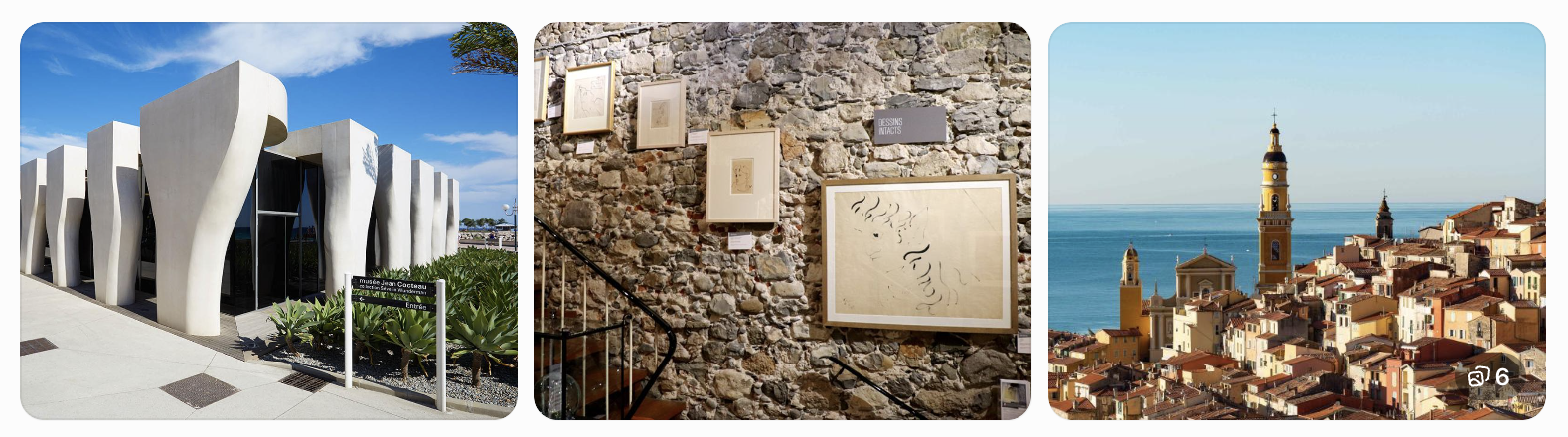
Jean Cocteau Museum
The Jean Cocteau Museum – Séverin Wunderman Collection presents works connected to Jean Cocteau’s diverse career, including drawing, painting, ceramics, and other forms of visual expression.
Menton and Jean Cocteau
Menton is closely associated with Cocteau and remains one of the most distinctive cultural destinations near the Italian border.
Best art museums in the South of France · Art destinations in Provence · French Riviera art museums · Montpellier art museums · Picasso museums in the South of France · Fondation Carmignac Porquerolles · Art trip from Spain to Italy