Izabela Kowalczyk

Reliefs
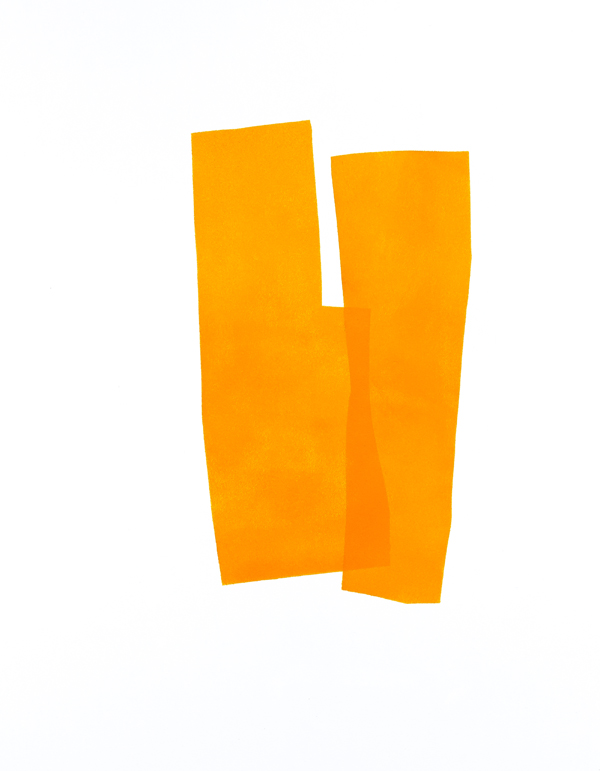
The first Reliefs were created for the project L'Art Renouvelle le Lycée 2012, organised by the
Passage de l'Art gallery. ARL theme ­ an opposition between excess and limitation ­ is present in
my work by questioning the border between painting and spatial objects. In Reliefs I take up the
theme by crossing bi­dimentional image limits and by opening them to other dimensions.
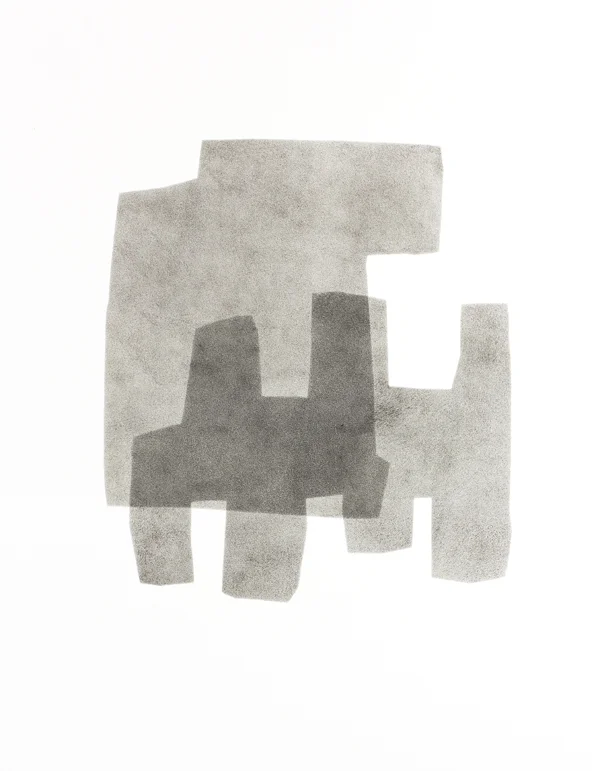
At first I replaced the usual base of my paintings (canvas on frame) by a woodboard. Next I
literally deepened the dissociation of the background and and the form of my images, cutting out
the form from the background and hanging it eight centimeters from the wall.
The forms hover on the wall which becomes the new background. It is a work on the border
between painting and sculpture.


The relationship between the plane form and the volume is very important during the phase of
cutting the forms from paper, essential to the creation of my works, both pictorial and spatial,
resulting from an intuitive need to experience space.
Eduardo Chillida's Gravitations are meeting points between the artist's graphics and sculptures.
The common ground between my paintings on canvas and my objects is a balance between a still
recognisable motif and pure plastic form, the creation of space from bi­dimensional elements, the
mutually interpenetrating planes, the relation of forms to the picture space.
The play of colours and contrasts create different planes and depth.

These plastic events are above all formal, although something of the figurative remains in them.
The starting point of an abstract form very often comes from figurative forms, brought on by
everyday reality. I am convinced that a real abstraction does not exist beyond of the idea of
abstraction. More than abstraction, I am interested in the oddity of the received form, the
multiplicity of senses which it evokes.
Chance plays an important part in my work. At the begginning I have a very general idea of what I want to do. I start by putting some pieces of paper on the floor and I observe what happens. Often the proces is long. If I am perceptive, sometimes something happens. The image lets itself be followed and, slowly something appears.
In my most recent spatial works, I introduce the space (the emptiness) into the matter (the
fullness), searching for balance in reference to Eduardo Chillida. This process optically lightens
the composition so that the elements appear like fragments of a larger whole, the empty made
visible.

The wooden elements are bolted by small metal hinges and screws. The hinges have got a few
functions. They connect elements simultaneously keeping between them a fine separation line.
This line, as well as the forms' borders function as a drawing.
Apart from the possibility of real movement ( part folding of elements), hinges introduce an idea of
movement, imaginary and much more vast into the piece. This possibility of movement present in
reliefs, corresponds to the transparency effects, also illusory, in paintings on canvas.
The coexistence of these two kinds of work suggests a questionning of the nature of space,
between physical and mental space. Each approach describes a strange point of it, difficult to
situate, through a dialogue between the bidimensional image and tridimentional space on the one
hand and on the other hand these same elements only in their opposing direction.


MOTHER TONGUE - ISRAELI PAINTERS

One of the perks of leaving my homeland, is noticing everything i took for granted. I guess this list is one of those things. this is the world i grew up in as a painter :

Studio Critical by Valerie Brennan

Valerie Brennan has one of my favorite art blogs. it has a fix set of questions and an endless flow of works and artists going through it.

http://www.studiocritical.blogspot.fr/

I asked her to answer her own questions , she thought its cheeky, but we both liked the idea.

so here it is :

What are you working on in your studio right now?

I am in between finishing and starting new paintings, there are always a few paintings knocking around the studio that are utter failures waiting for their time. They often reveal themselves to be very pivotal works for me, they are completely unpredictable because some are years old and have seen many manifestations over time and I really don’t know when or how they will be resolved or should I say where my jumping off point is and they require no more from me. I have just finished 3 large paintings that I have been working on for a while now, they have required a few tactical retreats in the process but yes, now I am happy with them.

Can you describe your working routine?

I work early, first thing I am in my studio at 8am or so, my time is limited and a real balancing act with 2 children to look after, so I am very focused in my studio. I have a good strong coffee and get stuck in. My studio is not in my house so I take lots of photos to look at later, when I have time to reconsider what happened that day.

Can you describe your studio space and how, if at all, that affects your work?

I am lucky I have a great space, it’s an old stone storage, a big stone shell of a building with real character and beauty, the light is naturally very dynamic with such strong sun here so it has its own vibe at all times of the day. The volume of space is great for me and I have surrounded myself with my work in all its stages. I also have one wall dedicated to drawings, I look at them all the time and I have come to rely on their presence. The space has also allowed me to work bigger, I love that I can put 5 or 6 large panels along the wall and can work on them together, literally walk along the wall painting. I can let things dry, take out old work, have everything out when I need it and store everything there. It really is an incredible studio to have.

Tell me about your process, where things begin, how they evolve etc.

I decide on a scale to use, order a batch of 6 maybe if they are small panels or 4 big panels. I put some colour down and just go from there. I don’t think each painting is an isolated event, so I find myself starting with the last paintings I made in my mind, sometimes painting what I have done before, and to go forward, I must destroy that and let the new painting reveal itself. When I am not painting I am drawing, one feeds the other. Also I have learned to just stop and back off and do something else when things aren’t going well. It can be a real emotional rollercoaster when it’s not working. It is so disheartening, it amazes me just how bad the feeling can be, still after all these years. On the other hand, it is hard to beat the highs of painting, I think there is no greater pleasure than being surprised by your own work.

What are you having the most trouble resolving?

Everything, continuing, inventing, reinventing, over working things, accepting failures, accepting successes, knowing when to stop…the list goes on.

Do you experiment with different materials a lot or do you prefer to work within certain parameters?

I use my materials in a traditional way, paint on a wood support, I play with spray paint, scale, mark making and have kept those parameters in place so far.

What does the future hold for this work?

Keep on making, hope to keep on showing and I am very much enjoying this time in painting and the community we have built through social media. I see artists taking back the power, carving their own careers, curating shows, creating platforms for their own and the work of others, it’s a movement of passion and a thing of great beauty.

Is there anything else you would like to add?

Thank you Yifat!

http://www.valeriebrennan.com/